
Aston Martin video
27 Mar 2021
Aston Martin sports cars: a journey through luxury and performance
Aston Martin isn't just a car brand, it's an icon in the car world. With a history marked by elegance, power and British craftsmanship, Aston Martin has managed to create some of the most sought after sports cars in the world. From their early days as racing cars to today's luxurious supercars, Aston Martin has constantly combined aesthetics with performance, making the brand an eternal favourite among car enthusiasts.
The beginning: a passion for racing
Aston Martin's history begins in 1913, when Lionel Martin and Robert Bamford founded the brand. Their first car, known as the Coal Scuttle, was built in 1915 and marked the start of what would become a remarkable journey. But it wasn't until after the First World War that Aston Martin began producing cars on a larger scale, and it was here that their passion for racing began to take shape.
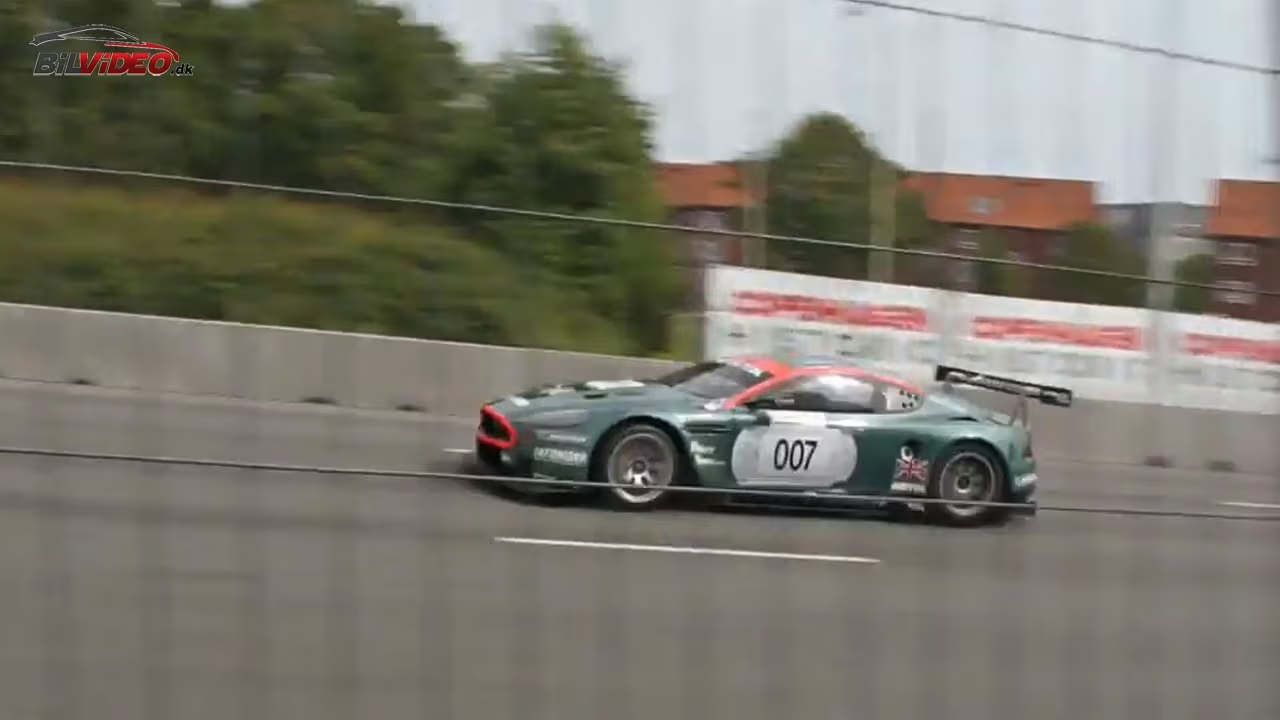
In 1922, Aston Martin entered their first Grand Prix, and this early success on the racetrack laid the foundation for the brand's reputation as a maker of high-performance sports cars. Throughout the 1920s and 30s, Aston Martin focused on developing racing cars that could compete with the best in the world. This focus on performance and racing quickly became an integral part of the brand's identity.
Iconic models: the DB series
When talking about Aston Martin, it's impossible to avoid their iconic DB series. This series, named after the British industrialist David Brown, who bought Aston Martin in 1947, has produced some of the most famous and beloved sports cars in car history.
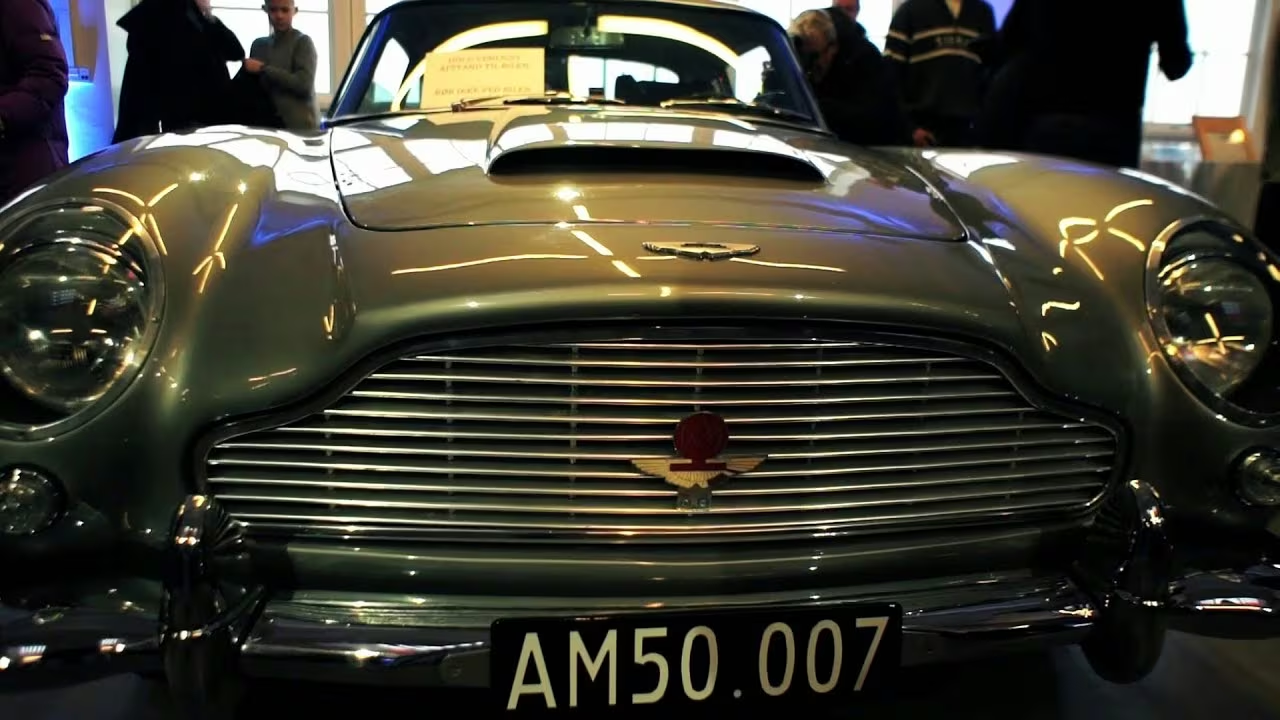
The Aston Martin DB2, launched in 1950, was the first model in this series and set the tone for what was to come. With its sleek design and powerful engine, the DB2 was an instant success and established Aston Martin as a serious competitor both on the road and on the track. But it was the Aston Martin DB5, introduced in 1963, that truly made the brand a global sensation. This model, immortalised as James Bond's favourite vehicle, combined luxury with impressive performance and quickly became one of the most iconic cars ever.
The DB5's popularity was further boosted by its appearance in the film Goldfinger, where it was fitted with various gadgets that made it just as dangerous as it was stylish. This association with James Bond has since been a central part of Aston Martin's brand identity, helping to cement its status as a brand for those seeking something beyond the ordinary.
Innovation and craftsmanship: development through the decades
While the DB series is without doubt the cornerstone of Aston Martin's legacy, the brand has continued to innovate and develop its sports cars over the decades. The 1970s and 80s were a time of both challenges and innovation for Aston Martin. Financial difficulties and changes in ownership made it a difficult period, but that didn't stop the brand from creating remarkable cars.
The Aston Martin V8 Vantage, introduced in 1977, was one of the cars that defined this era. The Vantage was designed as a high-performance variant of the existing V8 model and quickly became known as "Britain's First Supercar" thanks to its top speed of over 270 km/h. With its powerful engine and aggressive styling, the V8 Vantage set a new standard for what an Aston Martin could be.
In the 1980s and 90s, Aston Martin continued to develop new models building on the brand's reputation for luxury and performance. The Aston Martin Virage, introduced in 1989, was one of the first models developed under the new ownership of Ford, and it represented a new era for the brand. The Virage combined modern technology with Aston Martin's traditional craftsmanship and marked a return to form after the financial difficulties of the preceding years.
The new millennium: modern classics
Entering the 21st century, Aston Martin reinvented itself with a series of new models combining the best of their past with modern innovation. The Aston Martin DB9, launched in 2004, is one of these modern classics. The DB9 was the first model built on Aston Martin's new VH platform, giving the car an exceptional balance between performance and luxury. With its 6.0 litre V12 engine and timeless design, the DB9 quickly became a favourite among both critics and customers.
Another important model from this period is the Aston Martin V8 Vantage, introduced in 2005. This model, often called the "Baby Aston", was designed to compete with other luxury sports cars like the Porsche 911. The V8 Vantage combined Aston Martin's signature style with a more compact footprint and a lower price, making it accessible to a wider audience without compromising the brand's values.
The future of Aston Martin: electrification and sustainability
Like many other car manufacturers, Aston Martin now faces the challenge of adapting to a world moving towards sustainability and electrification. But as always, Aston Martin is committed to preserving its core values of luxury and performance, even as it embraces new technologies.
The Aston Martin Rapide E, the brand's first fully electric car, is a clear example of this balance. The Rapide E, launched in 2019, is an electric version of the popular Rapide model and represents the brand's first step into an electric future. With a top speed of over 250 km/h and a range of around 320 km, the Rapide E shows that Aston Martin can deliver electric cars that still live up to its high standards of performance.
But Aston Martin doesn't stop there. They've announced plans to expand their range of electric and hybrid cars in the coming years, including a fully electric version of their iconic DB models. At the same time, they're working to reduce their environmental footprint by implementing more sustainable production methods and materials.
The models at a glance
| Model | Year | Note |
|---|---|---|
| Coal Scuttle | 1915 | The first Aston Martin |
| DB2 | 1950 | First model in the DB series |
| DB5 | 1963 | James Bond's car in Goldfinger |
| V8 Vantage | 1977 | Called Britain's First Supercar, top speed over 270 km/h |
| Virage | 1989 | First model developed under Ford ownership |
| DB9 | 2004 | First car on the VH platform, 6.0 litre V12 |
| V8 Vantage | 2005 | Called the Baby Aston, rival to the Porsche 911 |
| Rapide E | 2019 | First fully electric model, range around 320 km |
A legacy of elegance and performance
Aston Martin's history is a story of elegance, performance and an unwavering dedication to craftsmanship. From their early days on the racetracks to their modern luxury cars, Aston Martin has always been synonymous with quality and exclusivity. And even as the car industry changes, it's clear that Aston Martin will continue to be a guiding star for those seeking a car that's not just a vehicle, but an experience.
Aston Martin's timeless appeal
Aston Martin sports cars are more than just cars, they're works of art on wheels, combining British elegance with groundbreaking technology and unrivalled performance. This article has taken you on a journey through the brand's rich history, from their early racing cars to their modern masterpieces, showing how Aston Martin continues to set the standard for luxury and exclusivity.
In a world where cars are becoming more and more common, Aston Martin stands as a symbol of something extraordinary. Their cars aren't just designed to drive, they're created to be loved, appreciated and admired. And even as the future brings new challenges and opportunities, it's clear that Aston Martin will continue to inspire car enthusiasts worldwide for many years to come.
Whether you're a fan of classic cars or excited about the electric models of the future, there's no doubt Aston Martin will remain one of the most sought after and respected brands in the car world. Their timeless appeal and unwavering dedication to quality ensure that every single Aston Martin rolling out of the factory is something truly special.
Here are a few more Aston Martin videos: