
BMW video
Updated 13 Jul 2025
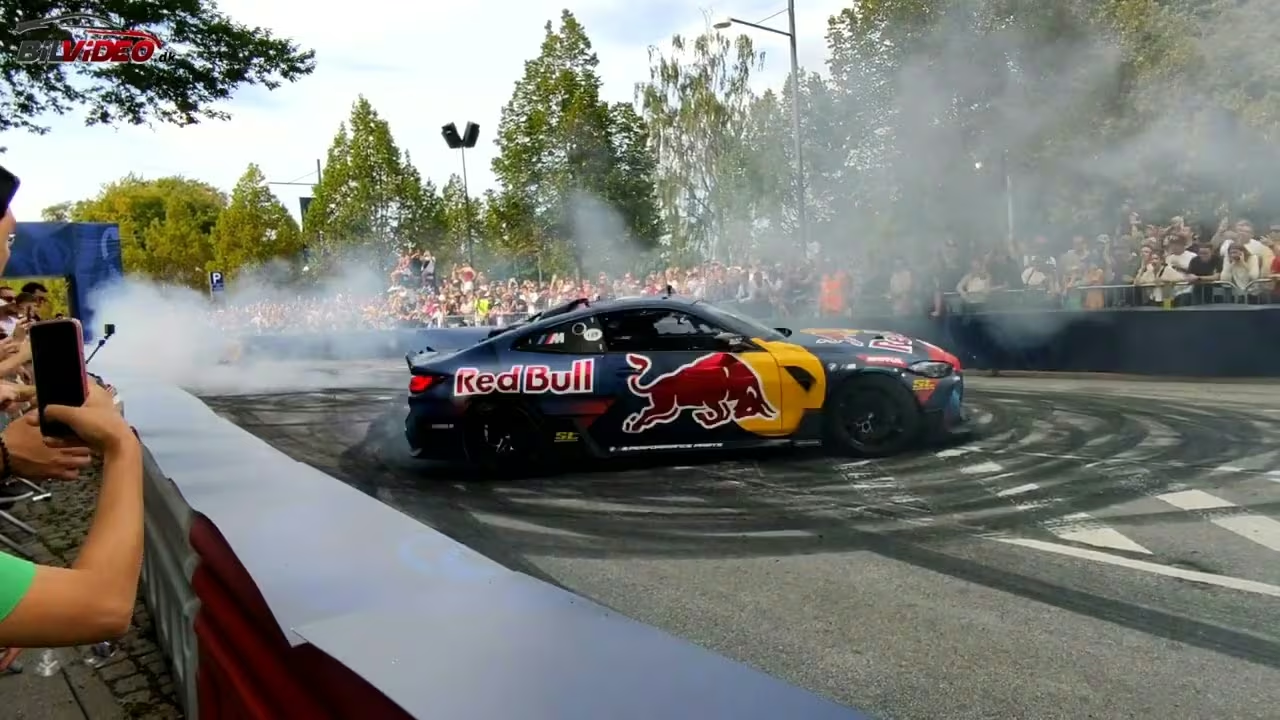
BMW's story: from aircraft engines to the driving pleasure of the future
BMW. Three letters that, for car enthusiasts worldwide, are synonymous with sporty luxury, innovative engineering and pure driving pleasure. But behind the iconic blue and white logo hides a more than 100 year long and dramatic story of aircraft engines, survival against all odds, legendary racing cars and an eternal pursuit of the perfect interplay between man and machine. Join us on a journey through BMW's history, a story every bit as fascinating as the cars themselves.
The start in the clouds: what does BMW actually stand for?
To find BMW's roots, we have to wind the clock back to 1916. Here, in the middle of the First World War, the company Bayerische Flugzeugwerke AG (BFW) emerged. Shortly after, another company, Rapp Motorenwerke, was restructured and given the name Bayerische Motoren Werke GmbH, shortened to BMW.
The focus in the beginning wasn't on cars, but on something entirely different: aircraft engines. BMW produced some of the most advanced aircraft engines of the era, known for their reliability and ability to perform at high altitudes. Their engines set several world records and were crucial to the German air force.
The iconic logo: a myth debunked
Everyone knows the round, blue and white logo. For decades, the story has gone that the logo symbolises a rotating aircraft propeller against a blue sky, a direct reference to the company's origins. It's a fantastic story, but it isn't entirely true.
The truth is that when BMW registered their new trademark, they used the colours of the German state of Bavaria, blue and white. However, the law forbade commercial use of state symbols, so BMW swapped the colours around. So it's actually the Bavarian colours at the core of the logo. The propeller myth was in fact created by BMW's own marketing department in a 1929 advertisement, and it's stuck around ever since, because it tells such a good story.
From two to four wheels: survival and innovation
After the First World War ended in 1918, everything changed. The Treaty of Versailles forbade Germany from producing war materiel, including aircraft engines. BMW suddenly had no product and had to think creatively to survive.
The solution was first found on two wheels.
The first BMW motorcycle: the R32
In 1923, chief designer Max Friz presented a masterpiece at the Paris Motor Show: the BMW R32. It wasn't just a bike with a random engine, it was a revolution. The R32 introduced the boxer engine with shaft drive that remains a hallmark of many BMW motorcycles to this day. It was reliable, well built, and laid the foundation for BMW Motorrad's legendary reputation.
The first BMW car: the Dixi was the start
The motorcycles were a success, but the dream of four wheels lived on. In 1928, BMW bought the car factory Fahrzeugfabrik Eisenach, which produced a small car under licence from British Austin 7. The car was called the Dixi 3/15 PS.
The following year, in 1929, came the first car with a BMW logo on the radiator: the BMW 3/15 DA-2. It was essentially an improved Dixi, but it was BMW's official entry into the car market. The step from the heights of the sky to the tarmac of the road had been taken.
Pre-war icons and the dark shadows of war
In the 1930s, BMW's development accelerated. The cars became bigger, faster and more sophisticated. The straight-six engines that would later become one of the brand's most famous hallmarks first saw the light of day.
BMW 328: a legend is born
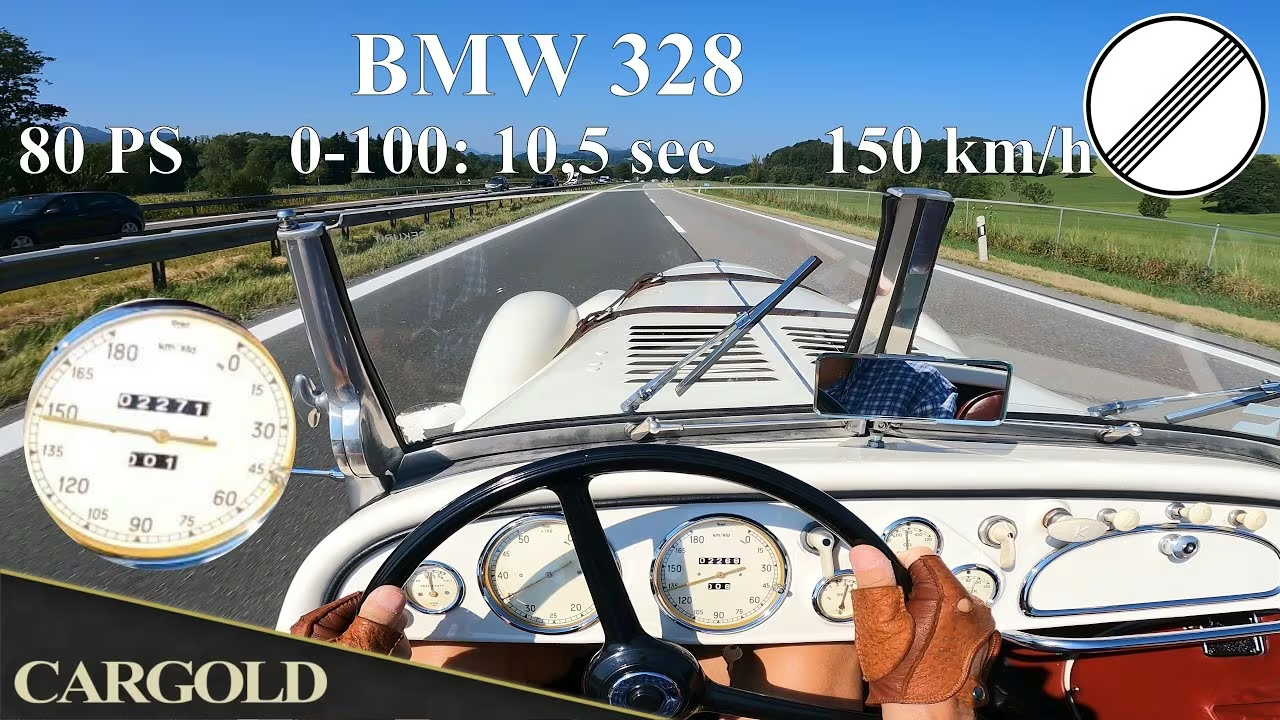
The high point of this era was without doubt the BMW 328, launched in 1936. It was a roadster as beautiful as it was fast. With its lightweight construction, advanced engine and excellent handling, it dominated racetracks all over Europe, including a class win in the famous Mille Miglia race in 1938. The BMW 328 cemented the brand's reputation as a maker of world class sports cars.
Here's a video with a BMW 328 Roadster:
The Second World War and reconstruction
The Second World War cast a dark shadow over BMW's history. Production was once again converted to the war effort, focused on aircraft engines and motorcycles for the military. The factories in Munich were bombed beyond recognition, and the factory in Eisenach ended up in the Soviet occupation zone after the war.
BMW lay in ruins, and the future looked bleak. In the first years after the war, the company survived by producing pots, pans and bicycles, anything they could to keep the wheels turning.
The rescue from the brink: the Isetta and the "Neue Klasse"
In the early 1950s, BMW tried its hand at large, luxurious sedans like the "Baroque Angel" BMW 501, but they were too expensive to produce and sold poorly. The company was on the brink of bankruptcy.
The Isetta: the tiny bubble car that saved a giant
The rescue came from an unexpected corner. BMW bought the licence to build an Italian microcar: the Isetta. The small, egg-shaped car with a door at the front was the exact opposite of what people usually associated with BMW, but it hit the mark in a post-war Europe where people needed cheap transport. Sales of the Isetta gave BMW the financial breathing room they desperately needed.
Neue Klasse: the recipe for future success
With their finances back on track, BMW could once again think ahead. In 1962 they launched the BMW 1500, the first model in what became known as the "Neue Klasse" (New Class). This was the prototype of the modern BMW: a compact, sporty sedan with a powerful engine, independent suspension and a light, elegant design.
The Neue Klasse became a massive success and defined the niche BMW would go on to dominate for decades: cars built for those who love to drive. This is where the slogan "Freude am Fahren" (Sheer Driving Pleasure) truly gained its meaning. From this platform later emerged the legendary model series such as the 3 Series, 5 Series and 7 Series.
The letter that means everything: the birth of BMW M
In 1972, BMW took their passion for motorsport to a new level by founding the subsidiary BMW Motorsport GmbH. The task was clear: develop racing cars that could win, and win they did.
From motorsport to road cars
After countless victories on the racetrack, a desire emerged among customers to get some of that same performance in their road cars. In 1978, the answer came: the BMW M1. It was a mid-engined supersports car, designed by Giorgetto Giugiaro, and the first car to carry the magical "M".
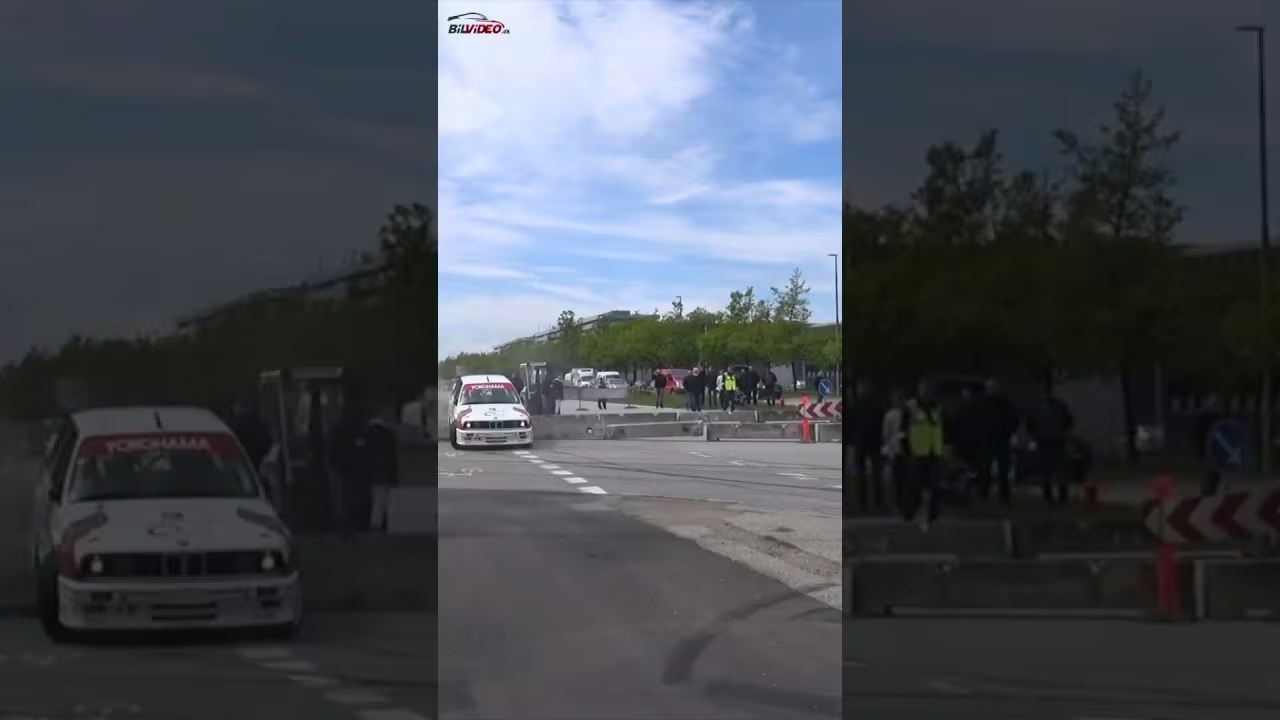
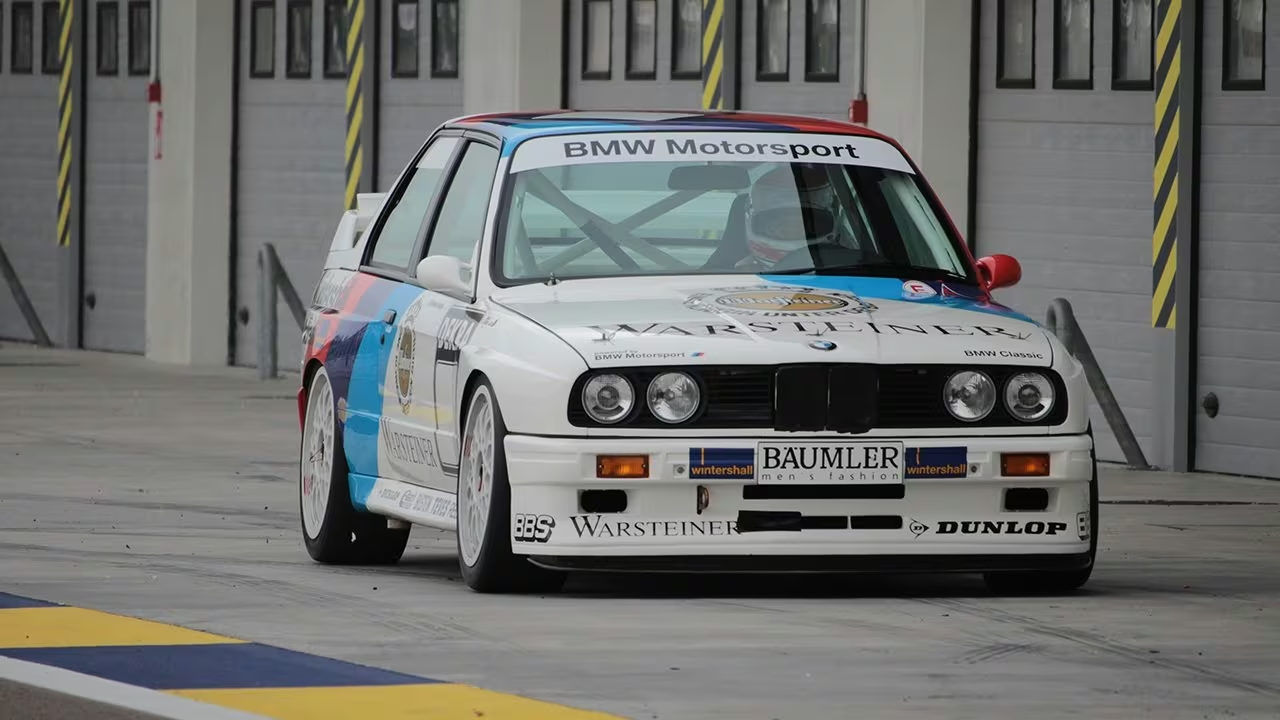
After the M1 came cars like the M535i and the legendary E30 M3, which carried the technology from the racetrack straight onto the road. "M" became the symbol of the very best of BMW's engineering, cars that delivered a driving experience without compromise.
BMW M3 E30 sound:
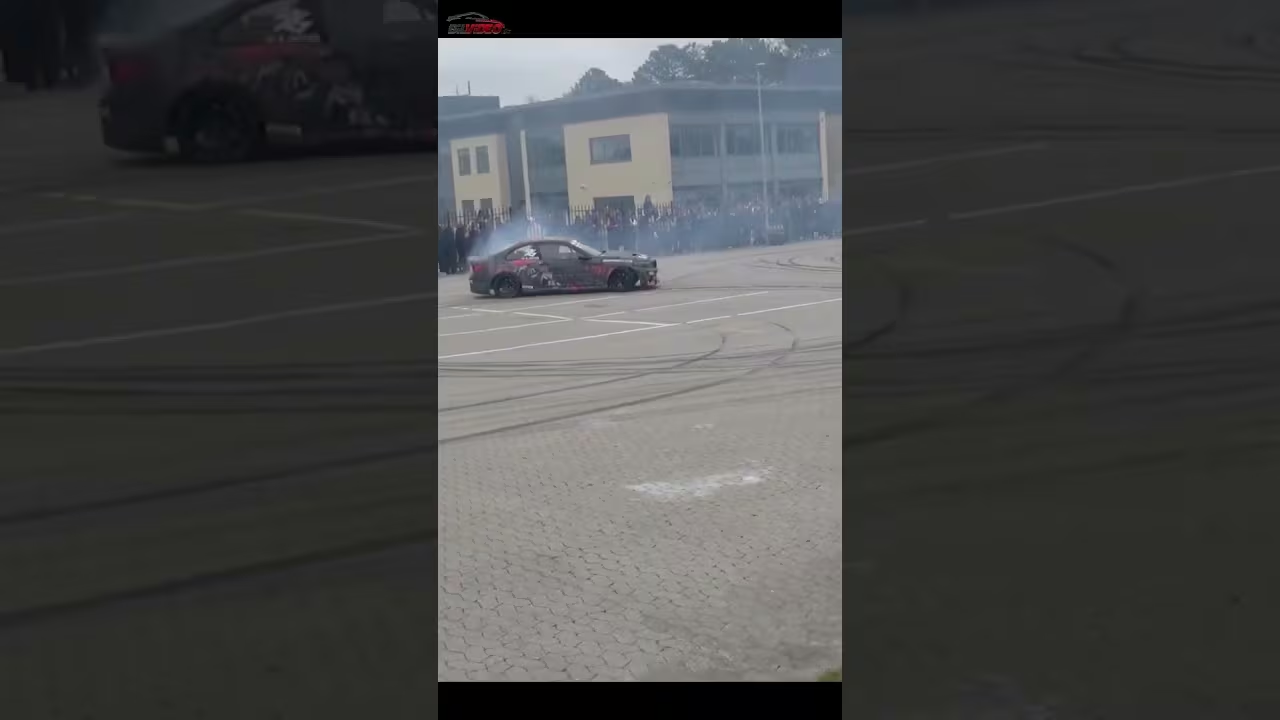
And then I came across this BMW video. It's an E92 M3. It sounds fantastic!
Modern times: design, dominance and electrification
From the 1990s onward, BMW has continued to expand its model range. They've embraced new technologies and entered new segments, sometimes with great success, other times with controversy.
X5: when BMW invented the "Sports Activity Vehicle"
In 1999, BMW launched their first SUV, the BMW X5. But they refused to call it an "SUV" (Sport Utility Vehicle). Instead, they created their own term: the "SAV" (Sports Activity Vehicle). The point was that this wasn't a clumsy off-roader, but a large car that still drove like a genuine BMW. The X5 became an enormous success and paved the way for an entire family of X models.
A new era: the i3, the i8 and an electric future
In 2013, BMW took a bold step into the future with the launch of the sub-brand "BMW i". The first two models were the revolutionary electric car i3, built from carbon fibre, and the futuristic hybrid sports car i8. These cars showed that electric mobility and driving pleasure could easily go hand in hand. Today, electrification is a central part of BMW's strategy, with a growing range of pure electric cars and plug-in hybrids.
The milestones at a glance
| Model | Year | Note |
|---|---|---|
| R32 | 1923 | First BMW motorcycle, boxer engine with shaft drive |
| Dixi 3/15 PS | 1928 | Licence built Austin 7 from the Eisenach factory |
| 3/15 DA-2 | 1929 | First car with a BMW badge on the radiator |
| 328 | 1936 | Roadster with a class win at the Mille Miglia in 1938 |
| 1500 | 1962 | First model of the Neue Klasse |
| M1 | 1978 | First M car, mid engine, designed by Giugiaro |
| X5 | 1999 | BMW's first SAV, Sports Activity Vehicle |
| i3 and i8 | 2013 | Carbon fibre electric car and hybrid sports car |
BMW today: more than just cars
BMW's story is a tale of rising from the ashes, of daring to innovate, and of an unshakeable belief that driving a car should be an experience. From the first aircraft engines to the newest electric models, a common thread has been technical curiosity and a passion for dynamics.
Watch BMW in action: a world of BMW videos
Reading about the history is one thing. Seeing and hearing these mechanical marvels in action is something else entirely. A well-produced BMW video can truly capture the soul of a roaring M model or the silent acceleration of a new electric car. Here at Bilvideo.dk we collect exactly this kind of experience, the kind that gets your pulse racing and shows why BMW remains one of the world's most sought after car brands.
Frequently asked questions about BMW's history
What does BMW stand for?
BMW stands for Bayerische Motoren Werke, which means "Bavarian Motor Works". The name refers to the company's origin in the German state of Bavaria.
Did BMW make aircraft during the war?
Yes, BMW's origins lie in producing aircraft engines. They produced advanced aircraft engines during the First World War and again during the Second World War, where it was a central part of their production.
What was the first BMW car?
The first car sold under the BMW name was the BMW 3/15 from 1929. It was based on a licence-built British car called the Austin 7, which BMW had acquired through the purchase of another factory.
Why are BMW M models special?
BMW M models are high-performance versions of standard BMW cars, developed by the subsidiary BMW M GmbH. They have more powerful engines, upgraded chassis, more aggressive designs and are built with technology and experience from the world of motorsport.
Below you can watch a few more BMW videos: