
Bugatti video
21 Mar 2021
Bugatti: A fascinating journey through car history
Imagine the sound of a powerful engine purring like a well-fed cat. Imagine elegant curves that leave even the most reserved car enthusiasts stunned. And imagine a story spanning more than a century, filled with innovation, passion and unrivalled luxury. This is the story of Bugatti, a legend in the car world that has defined what it means to build the ultimate sports car.
An Italian's dream in France
Bugatti's story begins with a man named Ettore Bugatti. Born in 1881 in Milan, Italy, Ettore grew up in an artistic family. His father, Carlo Bugatti, was a renowned furniture designer, and this creative spirit would prove decisive for Ettore's future career.
At just 17 years old, Ettore built his first car. It was the starting shot for a lifelong passion that would lead him to France, where in 1909 he founded Automobiles Ettore Bugatti in the idyllic town of Molsheim in the Alsace region.
The first masterpieces
Bugatti's first commercial success came with the Type 13 in 1910. This small, lightweight racing car won hearts and races all over Europe. It became known for its exceptional handling and reliability, qualities that would become Bugatti trademarks in the years to come.
But it was with the Type 35, launched in 1924, that Bugatti truly cemented its position in the world of motorsport. This car is still one of the most successful racing cars ever, with over 2000 wins during its lifetime. The Type 35's distinctive horseshoe-shaped radiator grille has become an iconic design element still found on Bugatti cars today.
Luxurious Grand Tourers
While Bugatti built its reputation on the racetrack, it didn't forget the luxury car market. The Type 41 Royale, introduced in 1926, was one of the most extravagant cars ever built. With an enormous 12.7 litre engine and a length of over 6 metres, the Royale was intended for royalty and the ultra wealthy. Only seven were built, and today they're among the most valuable cars in the world.
The Type 57, launched in 1934, marked another high point in Bugatti's history. In particular the Type 57SC Atlantic, with its distinctive "riveted" body design, has become a legend in the car world. With only four examples produced, the Atlantic is today one of the most sought after classic cars in existence.
Post-war challenges
The Second World War hit Bugatti hard. The factory in Molsheim was seized by the Nazis, and after the war the company struggled to reinvent itself in a drastically changed world. Ettore Bugatti died in 1947, and his son Jean had already died in a car accident in 1939.
Despite these tragedies, Bugatti continued producing cars in the 1950s. The Type 101 was an attempt to revive the pre-war successes, but only seven were built. The last "original" Bugatti was the Type 252 from 1956, a prototype that never reached production.
A legend reborn
After decades of dormancy, the Bugatti name was revived in 1987 by Italian entrepreneur Romano Artioli. He moved production to Campogalliano in Italy and, in 1991, launched the sensational EB110.
The EB110 was a technological tour de force. With a 3.5 litre V12 engine with four turbos, four-wheel drive and a carbon fibre body, it was the most advanced supercar of its time. The EB110 set several speed records and cemented Bugatti's return to the top of the car world.
The Volkswagen era: a new golden age
In 1998, the Volkswagen Group bought the rights to the Bugatti name and moved production back to Molsheim. Under Volkswagen's leadership, a new era began for Bugatti, characterised by extreme performance and luxurious elegance.
Veyron: moving the boundaries
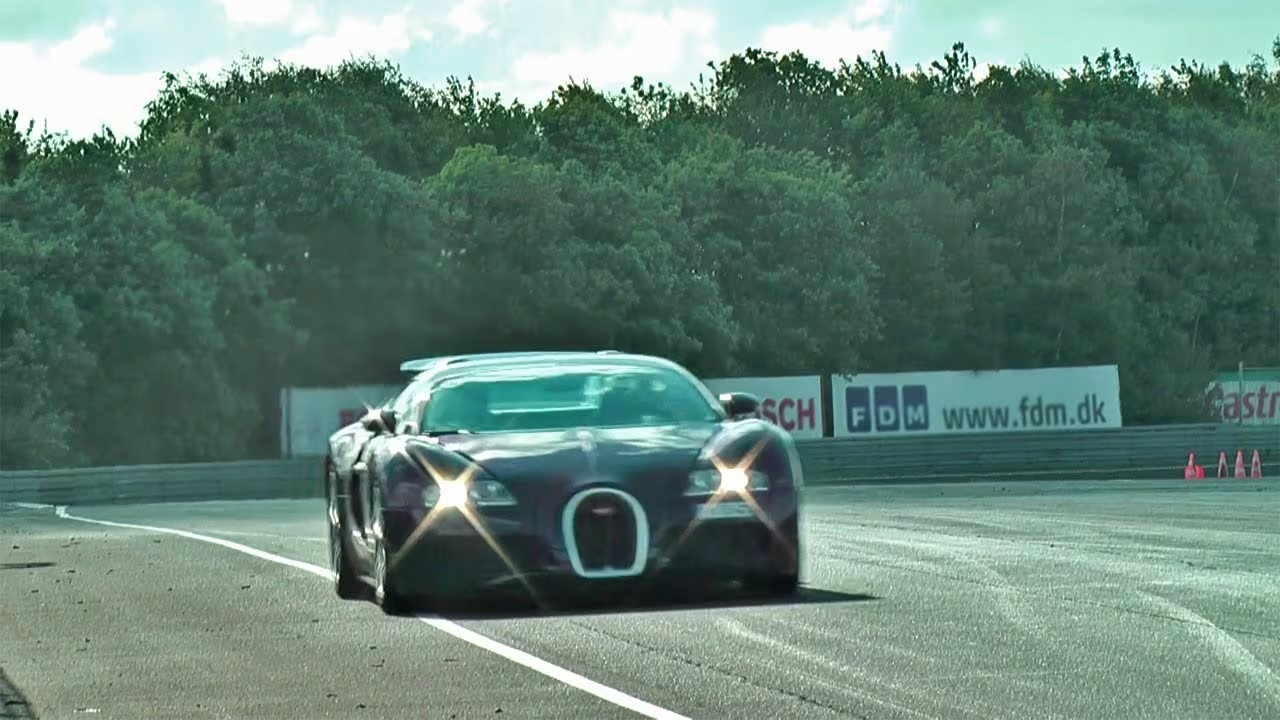
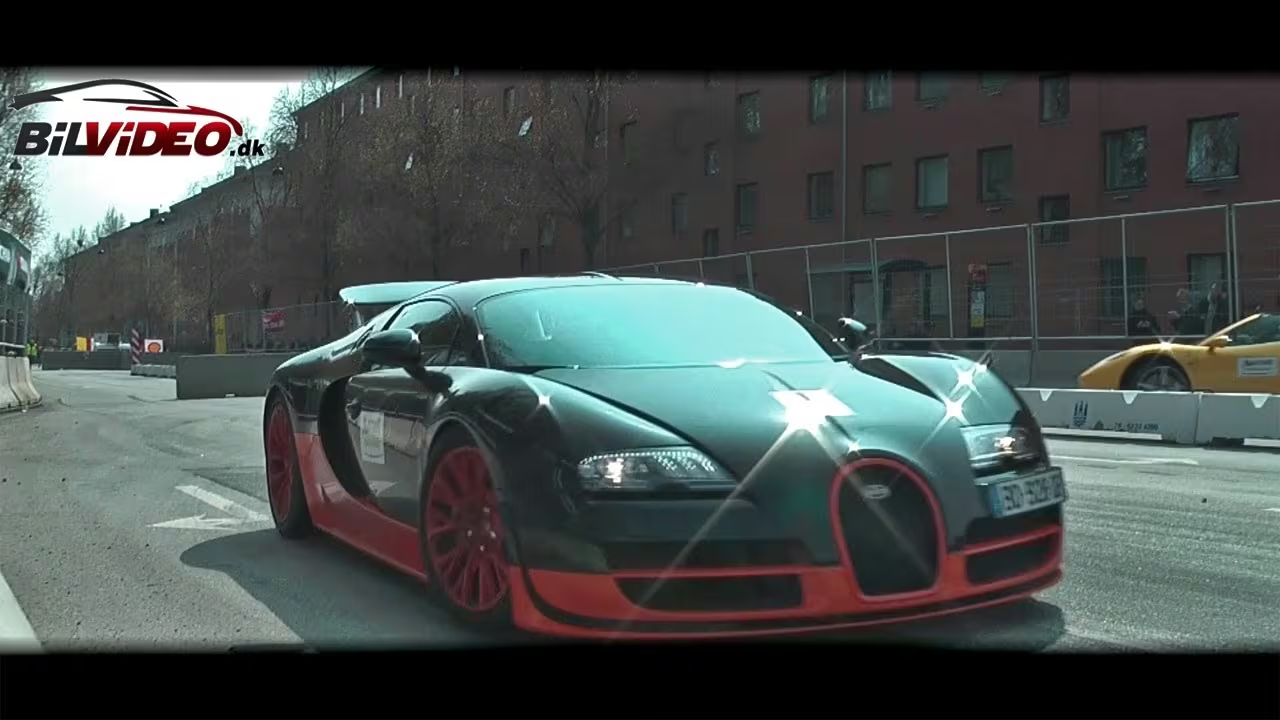
In 2005, Bugatti shocked the world with the introduction of the Veyron 16.4. With an 8.0 litre W16 engine with four turbos delivering over 1000 hp, the Veyron was the first production car able to reach a top speed of over 400 km/h.
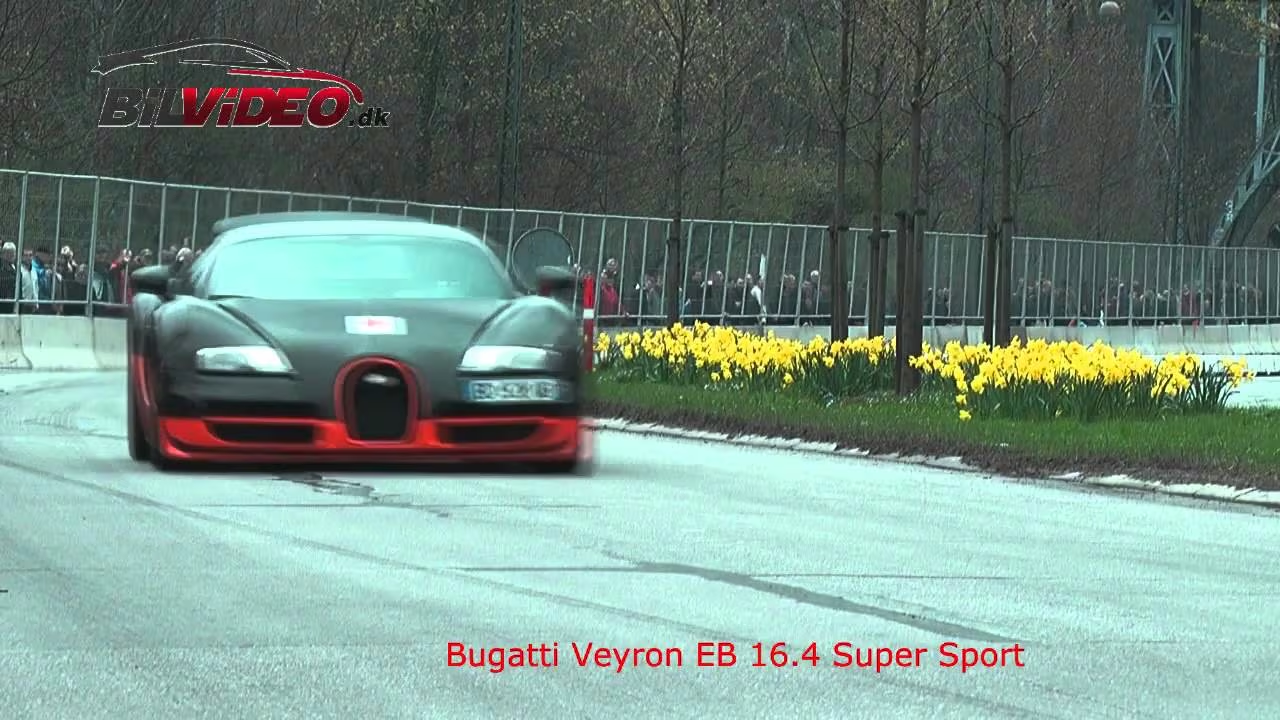
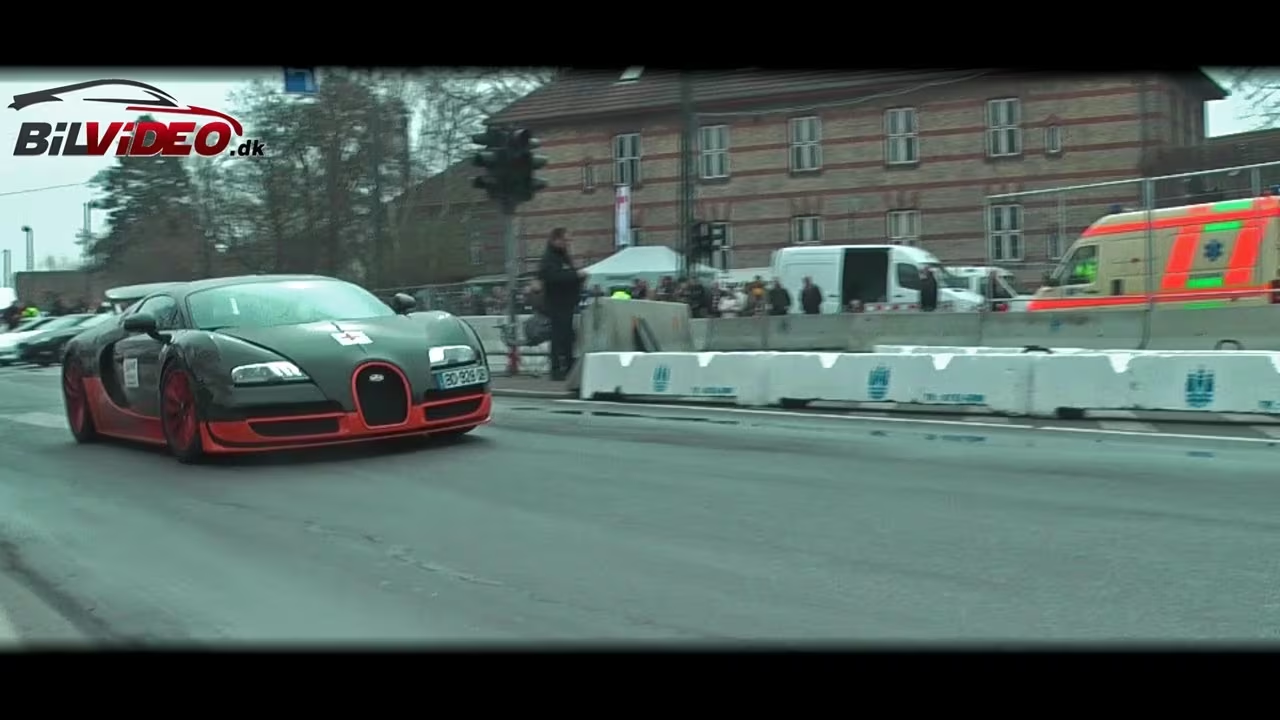
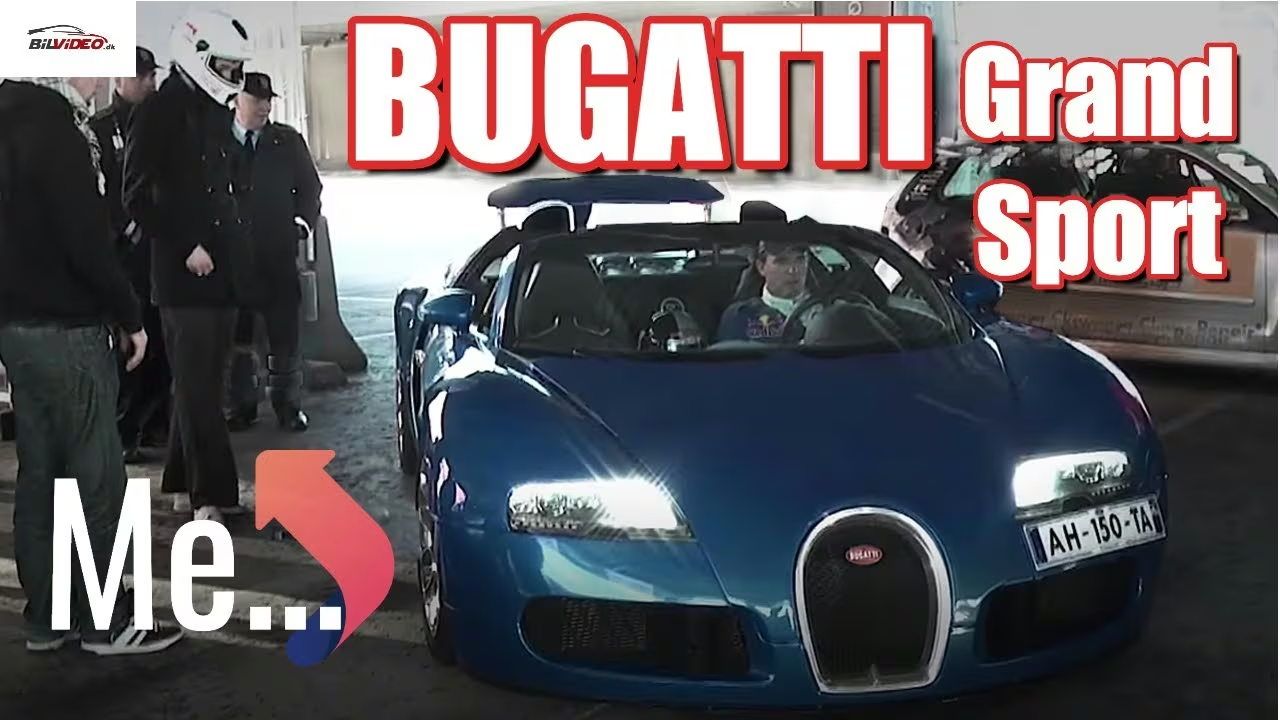
The Veyron was produced in several variants, including the open Grand Sport and the even more powerful Super Sport, which in 2010 set a new speed record for production cars at 431.072 km/h.
Chiron: the next generation
In 2016, Bugatti presented the Veyron's successor: the Chiron. Named after Bugatti's legendary racing driver Louis Chiron, this hyper car took the concept of extreme performance to new heights.
The Chiron kept the W16 engine, but output was boosted to a staggering 1500 hp. In 2019, the Chiron became the first production car to break the 300 mph barrier (482.80 km/h) with a specially modified Chiron Super Sport 300+.
Divo and Centodieci: tributes to the past
In recent years, Bugatti has introduced several limited edition models honouring the brand's rich history. The Bugatti Divo, named after French racing driver Albert Divo, focuses on handling and agility over pure top speed.
The Centodieci (Italian for "110") is a tribute to the EB110 and marks Bugatti's 110th anniversary. With only 10 examples produced, the Centodieci is a rare sight, combining modern Bugatti technology with design elements from the supercar era of the 90s.
Towards the future: the age of electrification
Like the rest of the car industry, Bugatti faces the challenge of adapting to a more environmentally conscious world. In 2019 they presented the Bugatti Vision Le Mans, a concept for a fully electric racing car.
Although Bugatti hasn't yet announced plans for a fully electric production model, they've taken steps towards hybrid technology. In 2024, Bugatti is expected to launch a new model combining a combustion engine with electric assistance.
Bugatti models through the ages
To give an overview of Bugatti's impressive model range over the years, here's a list of some of the most notable Bugatti models:
| Model | Year | Note |
|---|---|---|
| Type 13 | 1910-1920 | Bugatti's first commercial success |
| Type 35 | 1924-1930 | The most successful racing car in history |
| Type 41 Royale | 1926-1933 | One of the most luxurious cars in history |
| Type 57 | 1934-1940 | Includes the legendary Type 57SC Atlantic |
| Type 101 | 1951-1956 | Bugatti's attempt to revive its pre-war successes |
| Type 252 | 1957-1962 | The last "original" Bugatti prototype |
| EB110 | 1991-1995 | Bugatti's resurrection under Romano Artioli |
| Veyron 16.4 | 2005-2015 | The first production car over 400 km/h |
| Chiron | 2016-present | Bugatti's current flagship |
| Divo | 2018-present | Focused on handling and agility |
| Centodieci | 2019-present | A modern interpretation of the EB110 |
| La Voiture Noire | 2019 | A one-off model and the world's most expensive new car |
| Bolide | 2020 | An extreme track-only hyper car |
The legacy lives on
Today, Bugatti is more than just a car manufacturer, it's a symbol of the pinnacle of car design and engineering. Every Bugatti is a masterpiece of craftsmanship, requiring hundreds of hours to produce.
Bugatti's story is a tale of passion, innovation and the pursuit of perfection. From Ettore Bugatti's first creations to today's hyper cars, the brand has consistently pushed the boundaries of what's possible in car manufacturing.
Looking ahead, Bugatti faces new challenges. The electrification of the car industry and a growing focus on sustainability will undoubtedly shape the brand's future direction. But if history has taught us anything, it's that Bugatti has always managed to adapt and innovate.
Whatever the future brings, one thing is certain: Bugatti will continue to fascinate and inspire car enthusiasts all over the world. Because at the heart of every Bugatti still beats the spirit of Ettore, a blend of art, engineering and a relentless pursuit of perfection.
So next time you hear the distinctive growl of a Bugatti engine or see those iconic curves glide by, remember that you're not just looking at a car. You're witnessing a living piece of history, a legacy spanning more than a century that continues to define what it means to create the ultimate sports car.
Here are a few more Bugatti videos: