
McLaren video
27 Mar 2021
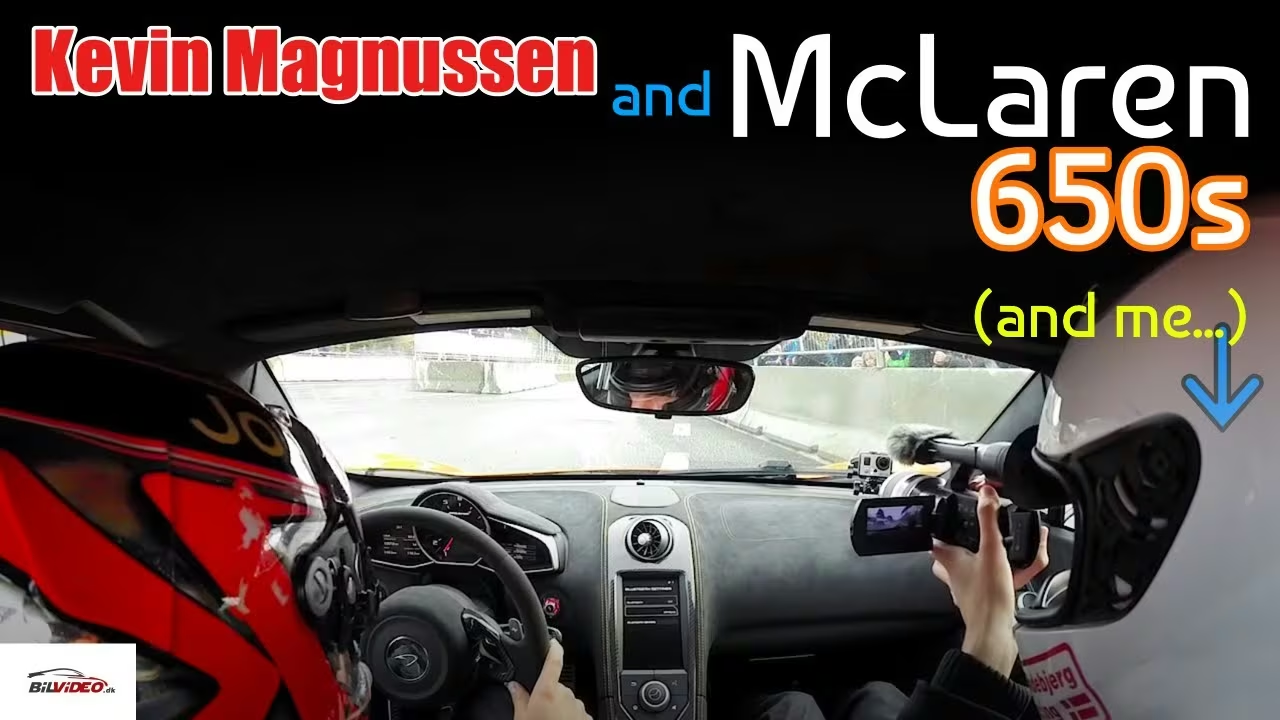
McLaren: from the racetrack to the streets
Imagine the smell of burnt rubber, the sound of an engine screaming at high revs, and the sight of a silver-grey rocket rushing past you on the racetrack. Welcome to the world of McLaren, a world where speed, innovation and precision meet in an explosive cocktail of high-performance sports cars and racing cars.
McLaren isn't just another car brand. It's a legend born on the racetrack, shaped by tragedy and triumph, and driven by an unrelenting urge to push the boundaries of what's possible on four wheels. Let's dive into the history of this iconic British car brand that has made the journey from Formula 1 podiums to the world's most exclusive garages.
Bruce McLaren: the man behind the legend
Our story begins with a young lad from New Zealand named Bruce McLaren. Born in 1937, Bruce suffered from a hip disease as a child that kept him bedridden for two years. But even that couldn't dampen his passion for speed and mechanics.
At the age of 15, Bruce took part in his first race in an Austin 7 Ulster, which he and his father had fixed up. It was the starting shot for a career that would take him to the top of the world of motorsport.
From driver to constructor
Bruce McLaren moved to England in 1958 to pursue his racing dream. He drove for the Cooper team in Formula 1 and won his first Grand Prix in 1959, at just 22 years old. But Bruce was more than just a talented driver. He was a visionary engineer and a born leader.
In 1963, Bruce McLaren founded Bruce McLaren Motor Racing Ltd. The team started out in Formula 2 and the Can-Am series, where they quickly established themselves as a dominant force. In 1966, McLaren made their Formula 1 debut with their own car, and a new chapter in motorsport history was written.
The tragedy and the legacy
Tragically, Bruce lost his life while testing a Can-Am car at the Goodwood circuit in 1970. He was only 32 years old. But his legacy lived on through the team that carried his name.
Under the leadership of Teddy Mayer, McLaren continued to win races and championships. In 1974, Emerson Fittipaldi secured the team their first Formula 1 World Drivers' Championship, and James Hunt repeated the feat in 1976.
The Ron Dennis era: a new golden age
In 1981, Ron Dennis' Project Four Racing merged with McLaren, and a new era began. Under Dennis' leadership, McLaren became synonymous with perfection and innovation.
The partnership with TAG Porsche in the 1980s resulted in three consecutive world championships from 1984 to 1986, with legendary drivers like Niki Lauda and Alain Prost behind the wheel.
But it was the partnership with Honda in the late 80s and early 90s that truly cemented McLaren's position as one of the most dominant teams in Formula 1 history. With Ayrton Senna and Alain Prost in the cockpit, McLaren-Honda won 15 out of 16 races in 1988, a record that still stands to this day.
From racetrack to road: the McLaren F1
In 1988, in the middle of their Formula 1 dominance, McLaren decided to build "the ultimate driving machine", a car that could bring their racing technology out onto public roads. The result was the McLaren F1, launched in 1992.
Designed by Gordon Murray and Peter Stevens, the F1 was a revolution in the supercar industry. With a centrally positioned driver's seat, a carbon fibre body and a 6.1 litre V12 engine from BMW, the F1 set new standards for performance and luxury.
In 1998, the McLaren F1 set a world record as the fastest production car, with a top speed of 386.4 km/h, a record that stood for more than a decade. With only 106 examples produced, the F1 is today one of the most sought after and valuable cars in the world.
The Mercedes-Benz partnership
In 1995, McLaren entered a partnership with Mercedes-Benz that would last nearly two decades. This collaboration led not only to success on the racetrack, but also to the development of new road cars.
The first fruit of this collaboration was the Mercedes-Benz SLR McLaren, launched in 2003. This grand tourer combined McLaren's racing technology with Mercedes' luxurious finish and was, at the time, one of the fastest production cars in the world.
McLaren Automotive: a new era begins
In 2010, McLaren launched a dedicated division for producing road cars: McLaren Automotive. Their first model was the MP4-12C (later known simply as the 12C), a high-performance sports car that challenged established rivals like Ferrari and Lamborghini.
The 12C was just the beginning. In the years that followed, McLaren launched an impressive range of models, each with its own unique character:
| Model | Year | Note |
|---|---|---|
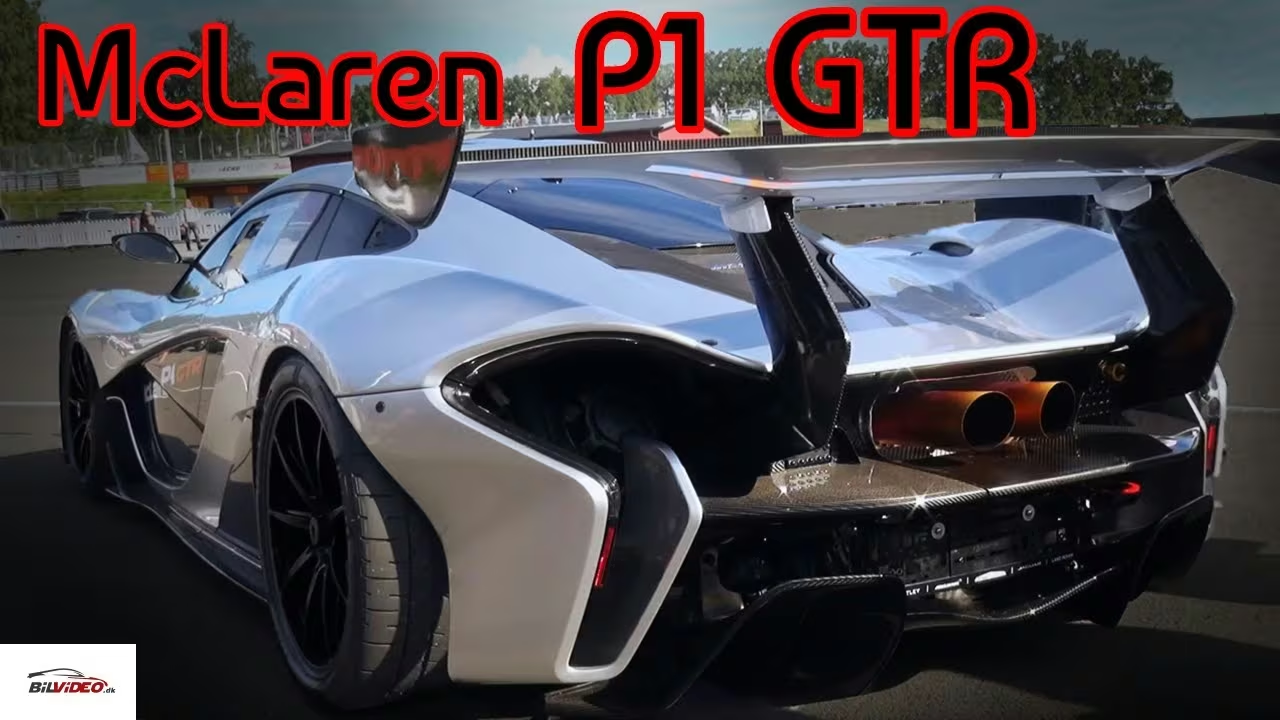
| P1 | 2013 | McLaren's first hybrid hypercar and part of the so-called "Holy Trinity" alongside the Ferrari LaFerrari and Porsche 918 Spyder. |
| 650S | 2014 | An upgraded version of the 12C with improved aerodynamics and performance. |
| 675LT | 2015 | A lighter, more focused version of the 650S, inspired by the legendary McLaren F1 GTR "Longtail". |
| 570S | 2015 | McLaren's entry into the more "affordable" sports car segment, known as the Sports Series. |
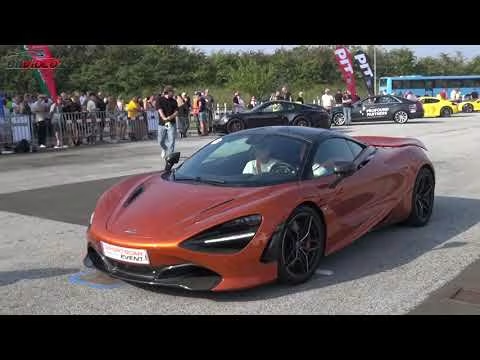
| 720S | 2017 | The first model in McLaren's second generation Super Series, with a revolutionary aerodynamic design. |
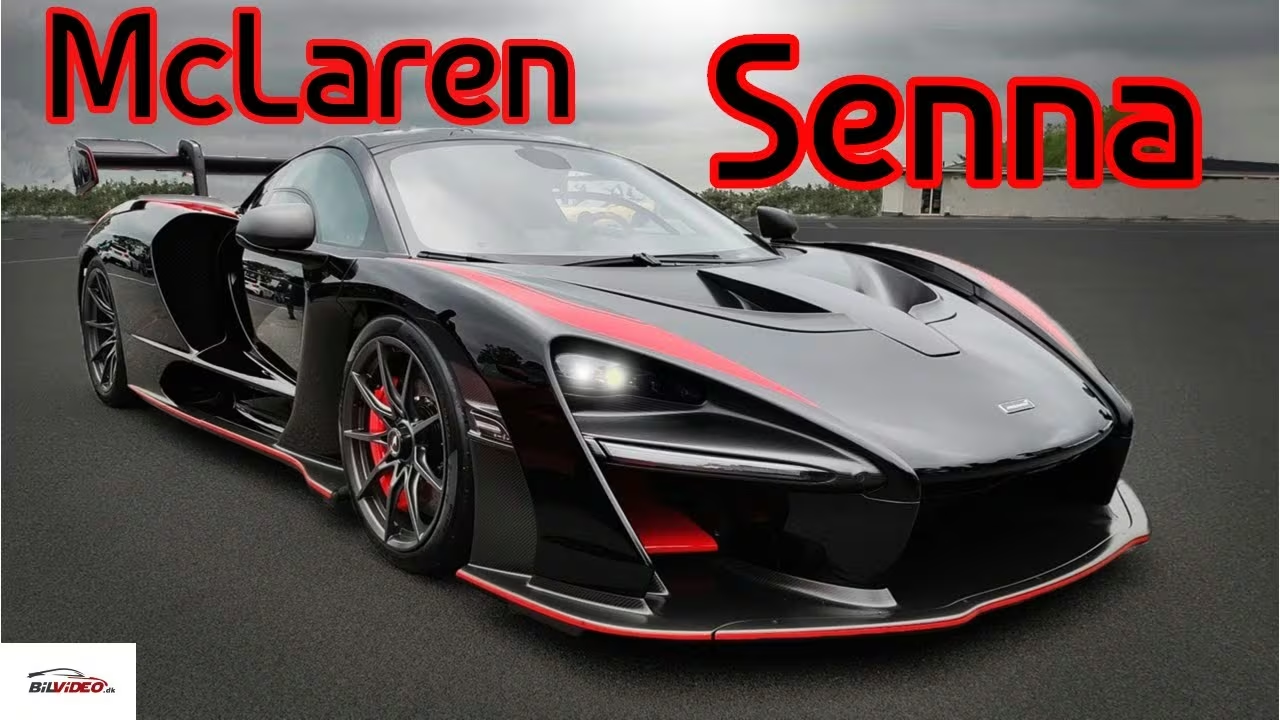
| Senna | 2018 | Named after the legendary Formula 1 driver Ayrton Senna, this car is the ultimate track-focused road car from McLaren. |
| Speedtail | 2019 | McLaren's modern interpretation of the F1 concept, with three seats and a top speed of 403 km/h. |
| GT | 2019 | McLaren's take on a more practical, comfortable grand tourer. |
| Elva | 2020 | An open two-seat roadster with no windscreen, inspired by Bruce McLaren's early racing cars. |
| Artura | 2021 | McLaren's first series-produced hybrid supercar, marking the start of a new era for the brand. |
Innovations and technology
McLaren has always been at the forefront of technological innovation. Some of their most notable contributions to the car industry include:
- Extensive use of carbon fibre: McLaren pioneered the use of carbon fibre monocoques in Formula 1 and brought this technology to road cars with the F1.
- Active aerodynamics: McLaren's active rear wing on the P1 and the innovative aerodynamic system on the 720S have set new standards for downforce and efficiency.
- Hydraulic suspension: The Proactive Chassis Control system, first introduced on the 12C, eliminates the need for traditional anti-roll bars.
- Hybrid technology: From the P1 to the new Artura, McLaren has led the way in integrating electric power into high-performance cars.
McLaren today: towards an electric future
Today McLaren faces new challenges. The car industry is moving towards electrification, and even supercar divisions have to adapt. McLaren has already taken steps in this direction with hybrid models like the P1 and Artura.
In 2021, McLaren announced plans to have their entire model range electrified by 2026, with a goal of launching their first fully electric model by 2030.
At the same time, McLaren continues to innovate in lightweight technology and aerodynamics. Their Ultimate Series, which includes models like the Senna and Speedtail, continues to challenge the limits of what's possible in a road car.
The legacy continues
From the early days on the racetrack to today's high-tech supercars, McLaren has always strived for the very best in performance and innovation. Every step along the way has been driven by Bruce McLaren's original vision: "to build a car faster than everyone else."
Today, McLaren is more than just a car brand. It's a symbol of British engineering, racing history and a relentless pursuit of perfection. Every McLaren isn't just a means of transport, but a piece of handmade art that brings the technology of the racetrack out onto the road.
When you see a McLaren rush by, you're not just looking at a car. You're seeing the culmination of more than half a century of passion, innovation and the pursuit of excellence. You're seeing the legacy of a young man from New Zealand who dreamed of building the world's fastest cars, and who made that dream a reality.
So next time you hear the distinctive roar of a McLaren engine or see the iconic papaya orange colours on a racetrack, remember: you're witnessing a piece of living motorsport history. A history that began with a boy and his dream, and continues to inspire and astonish car enthusiasts all over the world.
McLaren isn't just a car manufacturer. It's a legend on four wheels that continues to write new chapters in the great book of motorsport and supercar design. And we can hardly wait to see what the next chapter brings.
Here you can enjoy a few more McLaren videos: