
Mercedes video
21 Oct 2023


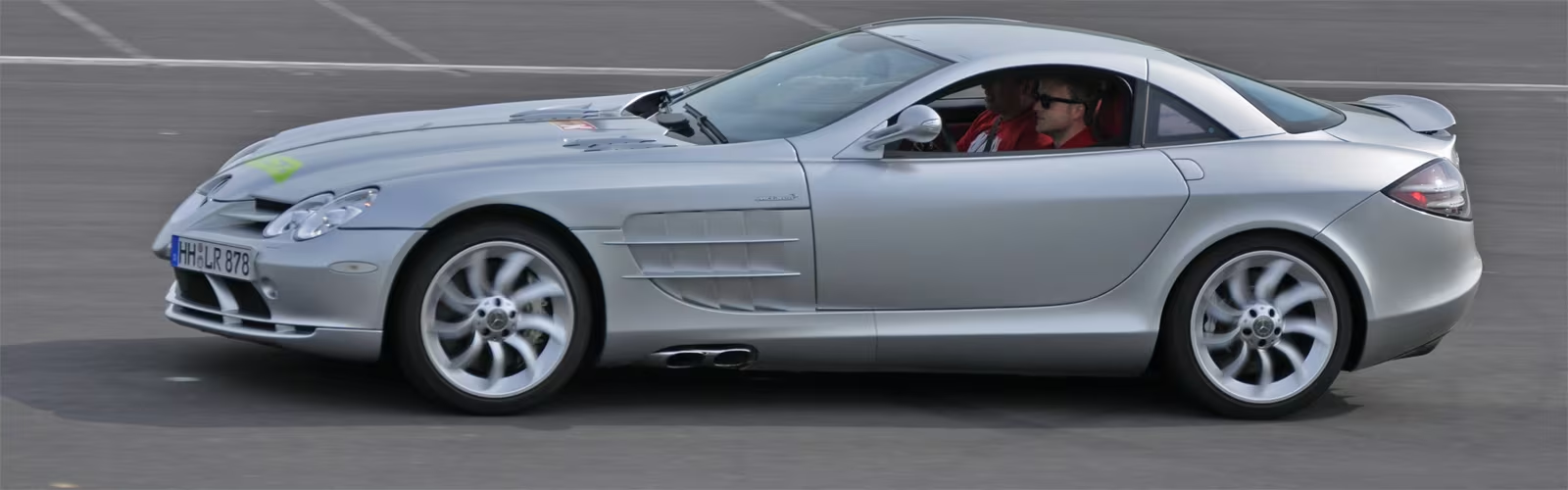
Mercedes
Mercedes sports cars: a journey through history and the future
Over time, Mercedes-Benz has made a name for itself synonymous with luxury, innovation and, not least, sports cars. From their early models to today's high-tech marvels, Mercedes has constantly been at the forefront of development when it comes to performance, design and technology. Let's take a journey through history and see how Mercedes' sports cars have evolved, and how they continue to set the standard for the cars of the future.
The beginning: from racing cars to road cars
Mercedes-Benz's passion for sports cars dates all the way back to the early 1900s, when the brand already made a name for itself on the racetracks. One of the first notable models was the Mercedes 35 PS, introduced in 1901. This model revolutionised the car industry with its lightweight chassis and powerful engine, making it a formidable competitor on the racetrack.
But Mercedes' sports car history really took off in the 1950s with the introduction of the Mercedes-Benz 300 SL "Gullwing". This model, launched in 1954, is perhaps one of the most iconic sports cars ever. With its distinctive gullwing doors and a top speed of over 250 km/h, the 300 SL wasn't just a car, it was a statement. It quickly became a favourite among both car enthusiasts and professional racing drivers, and it set new standards for what a sports car could achieve.
Innovation and technology: momentum in the 1960s and 70s
After the success of the 300 SL, Mercedes-Benz continued to develop sports cars that combined high performance with groundbreaking technology. In 1967 the Mercedes-Benz 300 SEL 6.3 was introduced, a model often seen as the forerunner of the modern sports sedan. With its powerful V8 engine, the 300 SEL 6.3 was one of the fastest four-door cars of its time, proving that luxury and speed could be combined in one car.
The 1970s brought us the Mercedes-Benz C111, a futuristic prototype that showcased Mercedes' commitment to innovation. The C111 wasn't just a sports car, it was an experimental vehicle testing new technologies such as Wankel engines and turbochargers. Although the C111 never went into production, it played an important role in the development of Mercedes' future sports cars and cemented the brand's reputation as a pioneer in car technology.
Modern times: sports cars for the 21st century
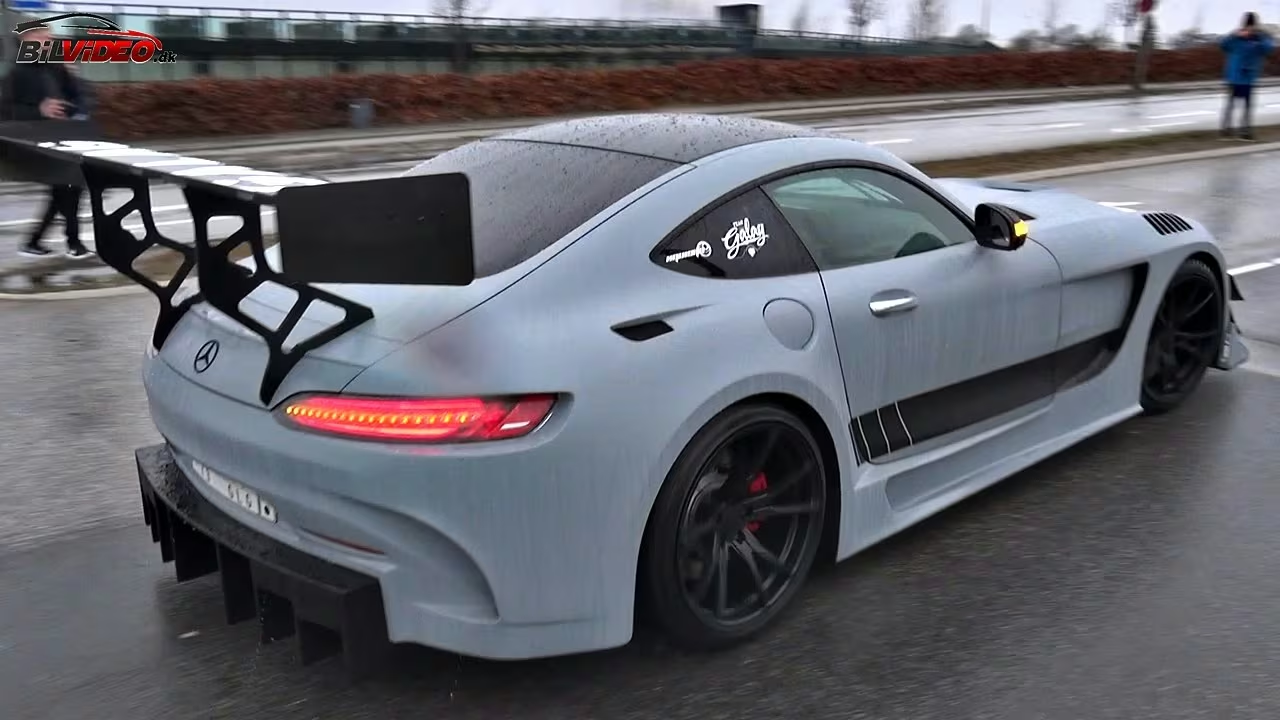
Into the new millennium, Mercedes-Benz has continued its tradition of creating sports cars that combine power, elegance and advanced technology. The Mercedes-AMG GT, launched in 2014, is a brilliant example of this. The AMG GT was developed by Mercedes-AMG, the brand's performance division, and was designed to compete with some of the world's most prestigious sports cars.
With its 4.0 litre biturbo V8 engine delivering up to 577 hp, the AMG GT isn't just a beauty on the road, but also a genuine powerhouse. It has a design that draws on Mercedes' rich history while introducing modern elements such as aerodynamic lines and an interior packed with the latest technology.
Another notable model is the Mercedes-AMG Project One, presented in 2017. This hyper car concept takes technology straight from Formula 1 and applies it to a road car. With over 1000 hp and a top speed of more than 350 km/h, the Project One is a demonstration of how Mercedes-Benz continues to push the limits of what's possible in sports cars.
Sustainability and the future of Mercedes sports cars
Today, as the car industry faces a shift towards more sustainable solutions, Mercedes-Benz is once again at the front with their electric sports cars. The Mercedes-Benz EQS AMG is one of the brand's first fully electric sports cars, and it represents the future of high-performance cars. The EQS AMG combines the power and precision Mercedes is known for with an electric drivetrain that ensures an emission-free driving experience.
This shift towards electrification shows how Mercedes-Benz continues to adapt to changing times without compromising on its core values. The Mercedes sports cars of the future will likely be a fusion of the best from the past and the newest technology, ensuring the brand remains relevant and leading in the car industry.
The models at a glance
| Model | Year | Note |
|---|---|---|
| Mercedes 35 PS | 1901 | Lightweight chassis and powerful engine, formidable on the racetrack |
| Mercedes-Benz 300 SL "Gullwing" | 1954 | Gullwing doors and a top speed of over 250 km/h |
| Mercedes-Benz 300 SEL 6.3 | 1967 | V8 engine and one of the fastest four-door cars of its time |
| Mercedes-Benz C111 | 1970s | Prototype with a Wankel engine and turbocharger, never went into production |
| Mercedes-AMG GT | 2014 | 4.0 litre biturbo V8 with up to 577 hp |
| Mercedes-AMG Project One | 2017 | Over 1,000 hp and a top speed of more than 350 km/h |
| Mercedes-Benz EQS AMG | Today | One of the brand's first fully electric sports cars |
Mercedes sports cars through the ages
Over the decades, Mercedes-Benz has proven itself to be one of the leading manufacturers of sports cars, delivering not just on performance but also on innovation and design. From the early racing cars to today's electric marvels, Mercedes has constantly been at the forefront of sports car development.
This article has taken you on a journey through time, where we've seen how Mercedes has managed to maintain its position as one of the most respected and admired car manufacturers in the world. And given the direction the car industry is heading, it's clear that Mercedes-Benz will continue to set the standard for sports cars for many years to come.
What readers can take away from this article is that no matter what the future holds, Mercedes-Benz will always be synonymous with luxury, performance and innovation. If you're a car enthusiast, there's no doubt Mercedes' sports cars will continue to be a source of fascination and inspiration, both on the road and on the racetrack.
You can find more Mercedes videos below: