
Porsche video
20 Mar 2021

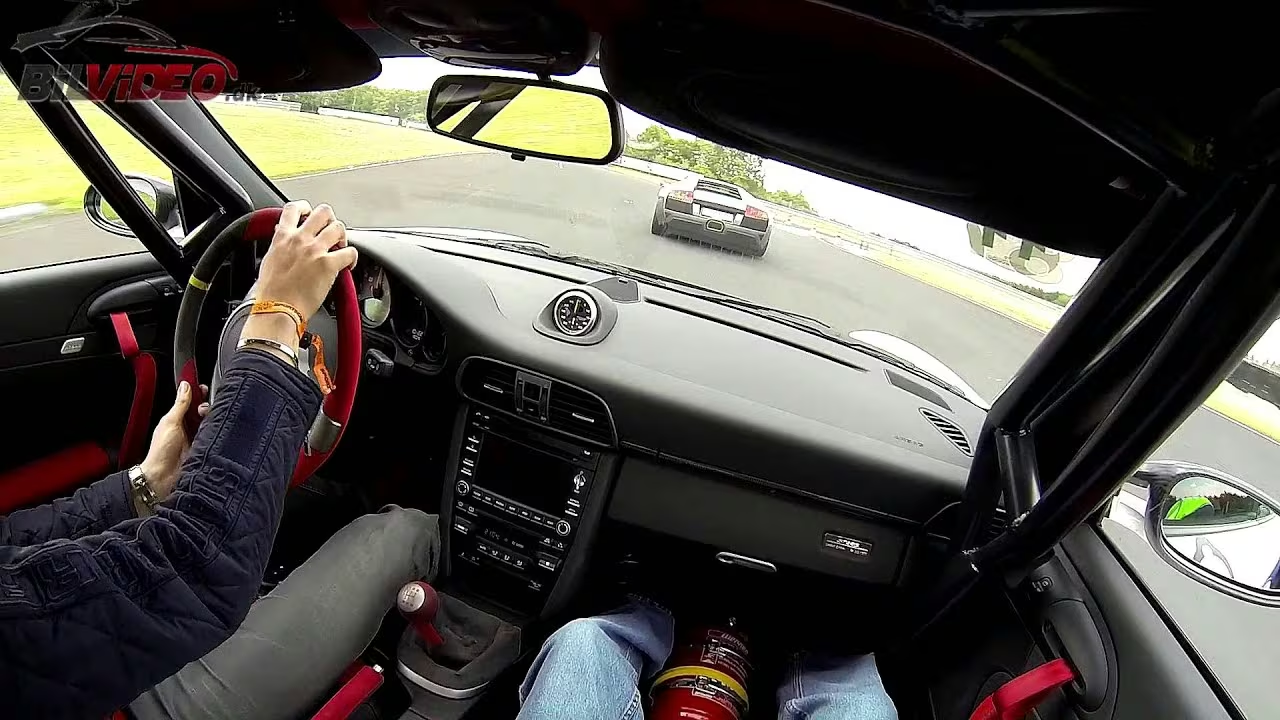
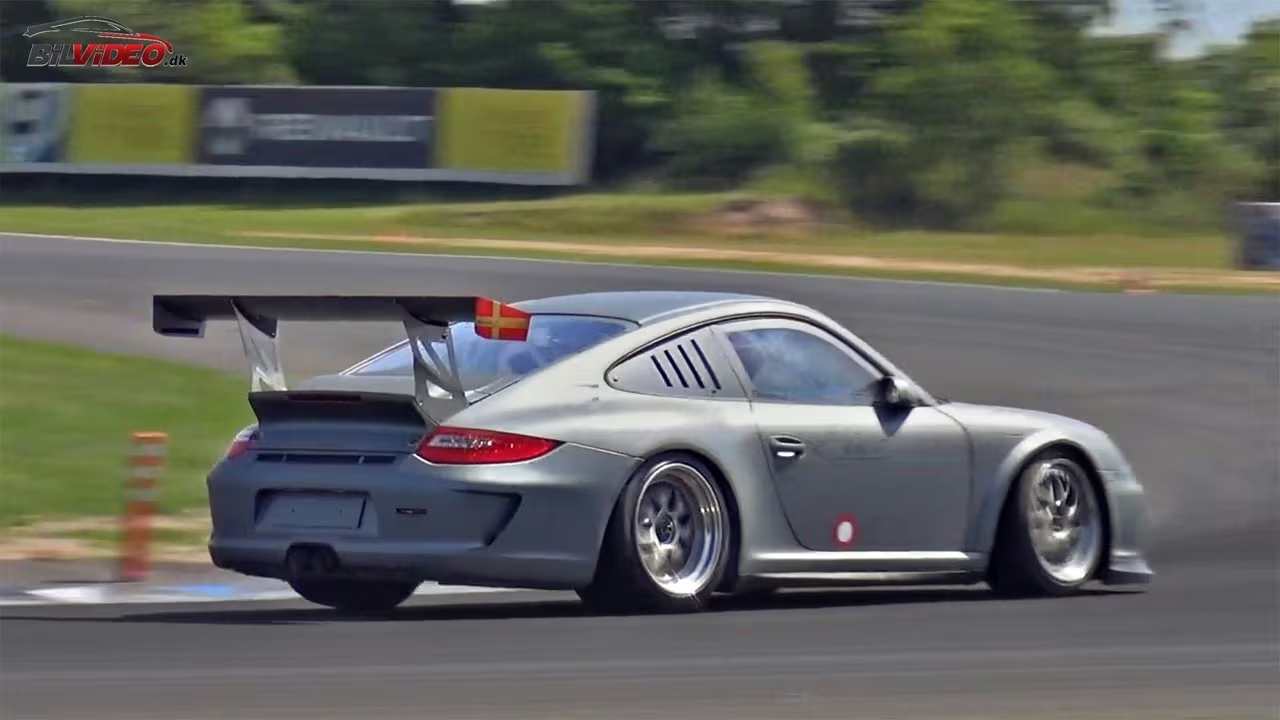
Porsche: a legend in German engineering
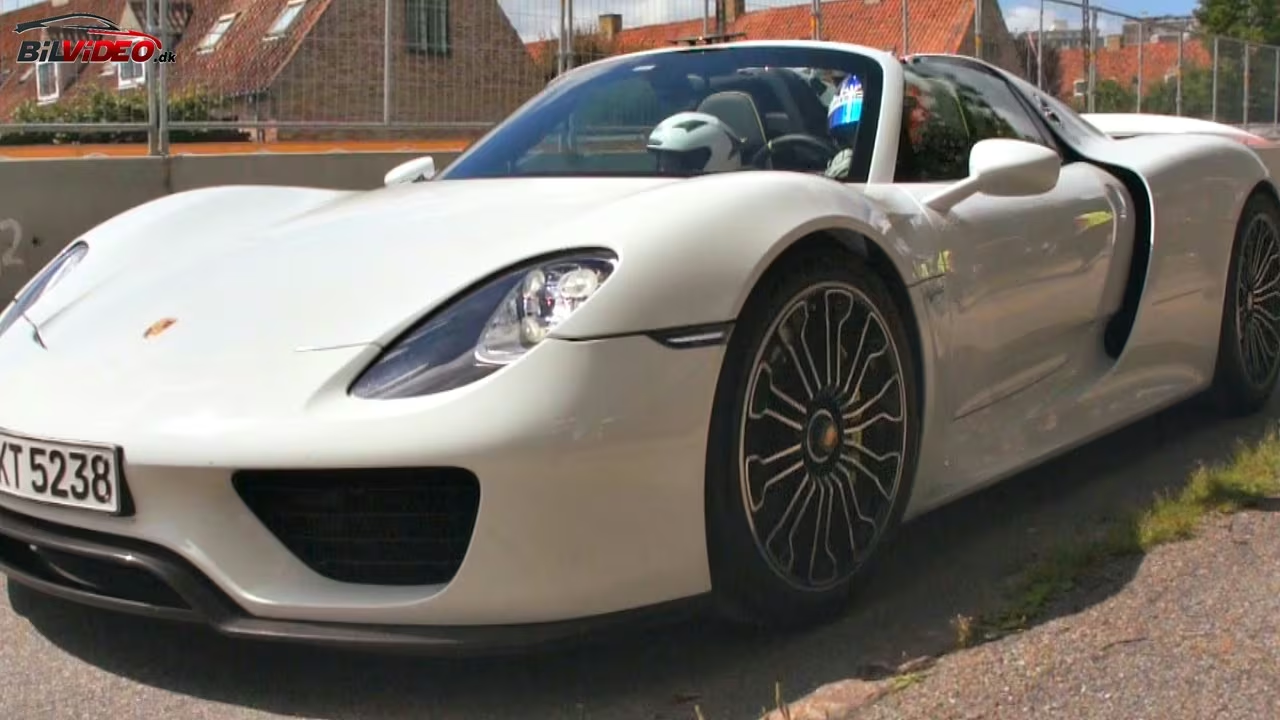
Imagine the sound of a finely tuned boxer engine spinning up to high revs. Picture the timeless lines of a 911 gliding through a corner on a mountain road. Feel the adrenaline pump as a 918 Spyder accelerates from 0-100 km/h in under 2.5 seconds. Welcome to the world of Porsche, a world where a passion for speed meets perfection in design and engineering.
Porsche isn't just a car brand. It's a legend that has shaped the sports car industry for more than seven decades. From humble beginnings in post-war Germany to today's high-tech hybrid supercars, Porsche has consistently set the standard for what a sports car can and should be. Let's dive into the history of this iconic German car brand that has captured hearts and racetracks all over the world.
Ferdinand Porsche: the visionary behind the legend
Our story begins with Ferdinand Porsche, a brilliant engineer born in 1875 in Bohemia (now part of the Czech Republic). Ferdinand showed exceptional talent for mechanics and electrical engineering from an early age. He designed one of the world's first hybrid cars in 1900 and later created the legendary Auto Union Grand Prix racer in the 1930s.
But it was another of Ferdinand's projects that would have an enormous impact on Porsche's future: the Volkswagen Beetle. This people's car, designed on the orders of Adolf Hitler, became the foundation for Porsche's first sports car.
Porsche 356: the first true Porsche
After the Second World War, Ferdinand Porsche and his son, Ferry Porsche, moved to Austria. Here they began working on their dream of creating a genuine sports car. In 1948, the first Porsche 356 was born.
The 356 was based on many components from the Volkswagen Beetle, but with a lighter, more aerodynamic body. It had a rear-mounted, air-cooled engine, a design feature that would become a Porsche trademark for many years to come.
The 356 was an instant success. It combined lightness, handling and reliability in a way no other sports car at the time could match. Over the next 18 years, more than 76,000 examples of the 356 were produced in various forms.
The iconic 911: a legend is born
In 1963, Porsche presented its new model, the 901. Due to a trademark dispute with Peugeot, the name was quickly changed to 911, and a legend was born.
Designed by Ferdinand "Butzi" Porsche, Ferdinand Porsche's grandson, the 911 was a revolution. It kept the rear-mounted, air-cooled engine from the 356, but with six cylinders instead of four. The iconic silhouette, with its flowing lines and distinctive headlights, was both beautiful and functional.
The 911 quickly became Porsche's flagship and remains so to this day. Over the years it has undergone countless improvements and updates, but the basic shape and philosophy have remained intact. Some of the most notable variants include:
| Model | Year | Note |
|---|---|---|
| 911 Carrera RS | 1973 | A lightweight version designed for racing. |
| 911 Turbo | 1975 | One of the first mass-produced turbo cars. |
| 911 GT3 | 1999 | A high-performance version optimised for use on the racetrack. |
| 911 GT2 RS | 2010 | The fastest and most powerful 911 ever. |
Porsche expands: from the 914 to the Panamera
While the 911 remained Porsche's flagship, the brand began exploring new segments:
| Model | Year | Note |
|---|---|---|
| 914 | 1969 | A collaboration with Volkswagen that resulted in an affordable mid-engined sports car. |
| 924 | 1976 | Porsche's first front-wheel drive model, designed as a more affordable entry into the brand. |
| 928 | 1978 | A luxurious grand tourer with a front-mounted V8 engine, designed to replace the 911 (which never happened). |
| 944 | 1982 | A further development of the 924 with improved performance and style. |
| Boxster | 1996 | A return to the mid-engined layout, which breathed new life into Porsche in the 1990s. |
| Cayenne | 2002 | Porsche's controversial but hugely successful entry into the SUV market. |
| Cayman | 2005 | A coupe version of the Boxster that quickly became beloved for its exceptional handling. |
| Panamera | 2009 | Porsche's first four-door sedan, combining sports car performance with luxurious comfort. |
| Macan | 2014 | A smaller SUV that brought the Porsche driving experience to a wider audience. |
| Taycan | 2019 | Porsche's first fully electric car, marking the start of a new era for the brand. |
Racetrack successes: Le Mans and more
Porsche has always had a strong presence in motorsport. The brand has won in virtually every form of motor racing, but its success at the Le Mans 24 Hours in particular is legendary. With 19 overall wins (as of 2023), Porsche is the most successful manufacturer in the race's history.
Some of Porsche's most iconic racing cars include:
| Model | Year | Note |
|---|---|---|
| 550 Spyder | 1953 | The small, lightweight racer that gave Porsche their first major wins. |
| 917 | 1969 | One of the most dominant racing cars ever, which gave Porsche their first overall win at Le Mans. |
| 956/962 | 1982/1984 | Dominated endurance racing in the 1980s with advanced aerodynamics. |
| 911 GT1 | 1996 | An extreme version of the 911 that won Le Mans in 1998. |
| RS Spyder | 2005 | Won several championships in the American Le Mans Series. |
| 919 Hybrid | 2014 | Won Le Mans three years in a row, from 2015 to 2017. |
Innovations and technology
Porsche has always been at the forefront of technological innovation. Some of their most notable contributions to the car industry include:
- Air cooling: Porsche perfected air-cooled engines in the 911 before switching to water cooling in 1998.
- Turbocharging: Porsche was among the first to bring turbocharging to road cars with the 911 Turbo.
- Four-wheel drive: Introduced in the 959 and later implemented in the 911 Carrera 4.
- Tiptronic gearbox: One of the first successful automatic gearboxes in a sports car.
- Porsche Dynamic Chassis Control (PDCC): An active stabilisation system that reduces body roll in corners.
- Porsche Doppelkupplung (PDK): A high-performance dual-clutch gearbox that combines manual control with automatic convenience.
Porsche today: electrification and the future
Today, like the rest of the car industry, Porsche faces the challenge of electrification. But in true Porsche style, they've taken on the challenge with enthusiasm and innovation.
The Taycan, Porsche's first fully electric model, has already proven itself a worthy bearer of the Porsche name, with impressive performance and handling. Porsche has committed to investing billions of euros in electrification and plans to have 80% of their sales be either fully electric or plug-in hybrid models by 2030.
But Porsche doesn't forget its roots. They continue to develop and improve their combustion engine models, particularly the 911, which remains the heart of the brand. They're also exploring alternative fuels such as synthetic petrol to reduce CO2 emissions from existing cars.
The legacy lives on
From the humble beginnings with the 356 to today's high-tech supercars and electric sedans, Porsche has always strived for the very best in performance, handling and innovation. Every step along the way has been driven by the founders' original vision: to create the ultimate driving machines.
Today, Porsche is more than just a car brand. It's a symbol of German engineering, racing history and a relentless pursuit of perfection. Every Porsche isn't just a means of transport, but a meticulously crafted piece of technology that brings the passion of the racetrack out onto the street.
When you see a Porsche glide by, you're not just looking at a car. You're seeing the culmination of more than 70 years of passion, innovation and dedication to driving pleasure. You're seeing the legacy of a family of visionary engineers who dreamed of building the world's best sports cars, and who made that dream a reality.
So next time you hear the distinctive growl of a Porsche engine or see the iconic shapes of a 911, remember: you're witnessing a piece of living car history. A history that began in post-war Germany and continues to inspire and astonish car enthusiasts all over the world.
Porsche isn't just a car manufacturer. It's a legend on four wheels that continues to define what a sports car can and should be. And we can hardly wait to see what the next 70 years will bring for this iconic brand.
You can watch more Porsche videos below: